
- Why Scent Matters in Interior DesignWhy Scent Matters in Interior Design
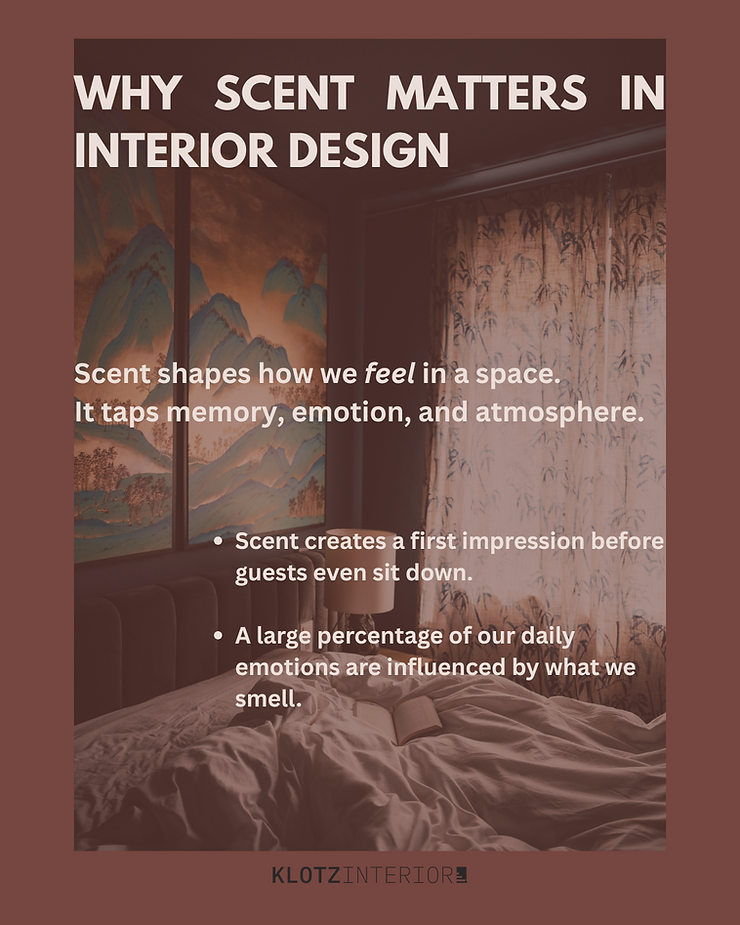
Scent shapes how we feel in a room. It works faster than sight, triggering emotional responses almost instantly. Long before guests sit down, notice the furniture, or admire the details, scent has already created a first impression.
Research and experience both show that smell is deeply connected to memory and mood. A space can feel calming, energizing, comforting, or luxurious within seconds — purely because of how it smells.
In interior design, this means scent is not an accessory. It’s a design tool.
- The Scent–Emotion Connection
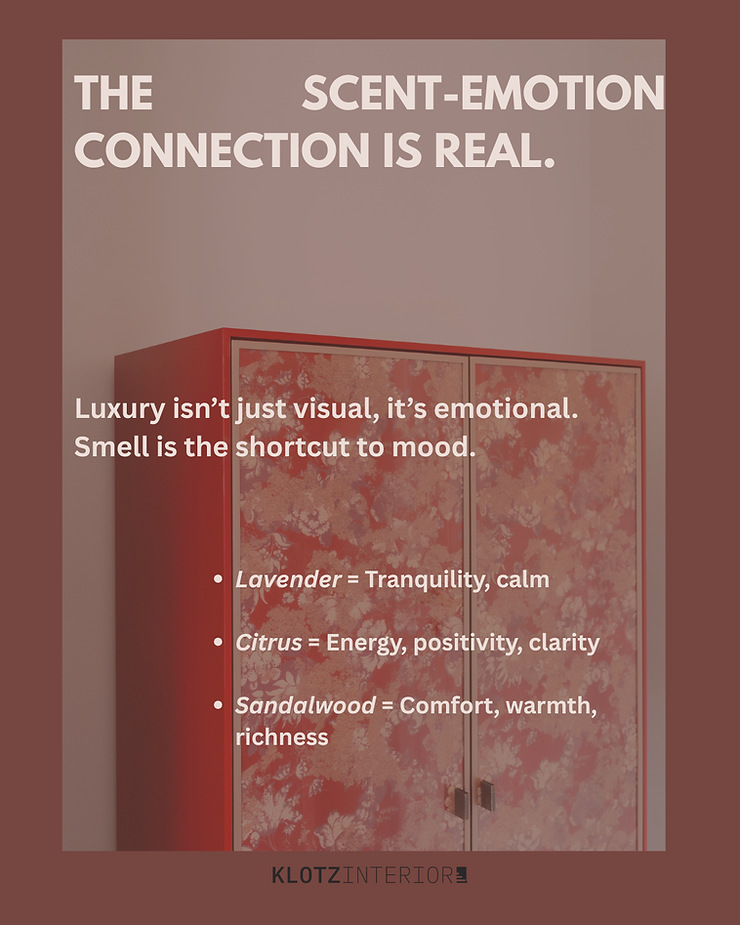
Luxus ist nicht nur visuell. Er ist emotional.Luxury isn’t just visual. It’s emotional.
Certain fragrances consistently evoke specific moods:
- Lavender promotes tranquility and calm, making it ideal for bedrooms or private retreats.
- Citrus notes bring energy, clarity, and positivity — perfect for entryways, kitchens, or workspaces.
- Sandalwood creates warmth, comfort, and depth, often associated with understated luxury and intimacy.
By consciously choosing scent profiles, we can subtly guide how a space is experienced — without adding a single visible object.
3. The Tools of Scent Styling
Just as with furniture or lighting, different tools create different effects. Choosing the right one depends on the space, the rhythm of daily life, and the desired atmosphere.
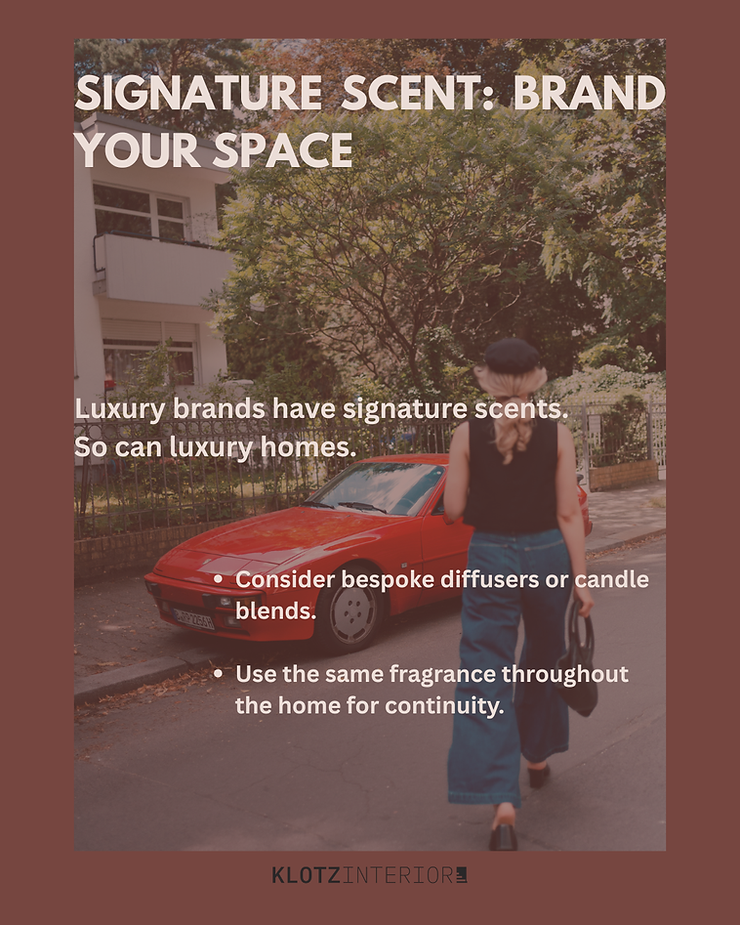
- Reed diffusers offer low-maintenance elegance and consistent scent diffusion. They’re ideal for spaces that should always feel “ready.”
- Candles combine fragrance with atmosphere, layering scent with light and ritual. They invite pause and presence.
- Electric diffusers provide clean, programmable scent delivery — precise, modern, and adaptable.
There is no single correct choice. The best interiors often layer these tools, just as they layer textures and materials.
4. Creating a Signature Scent for Your Space
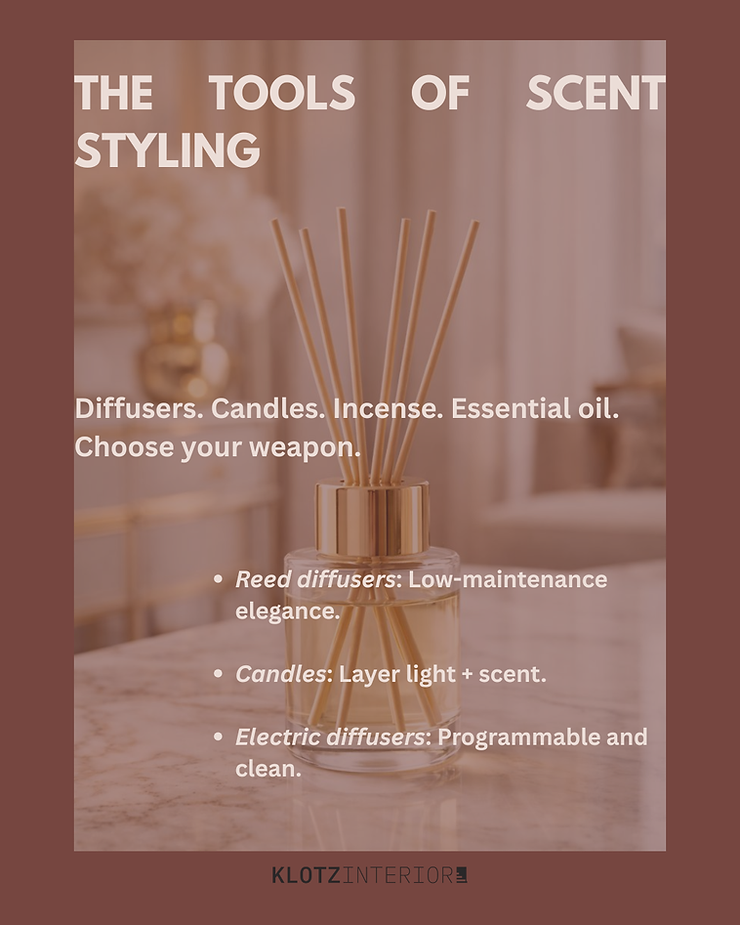
Luxury brands are instantly recognizable — not only visually, but emotionally. Many achieve this through signature scents. Homes can do the same.
A consistent fragrance used throughout a space creates continuity and identity. It turns rooms into a cohesive experience rather than a series of separate moments.
A signature scent doesn’t need to be strong or dramatic. In fact, the most refined interiors use scent subtly — something felt more than noticed.
5. Designing Beyond What You See
nterior design is no longer just about how a space looks in a photograph. It’s about how it feels to live in, move through, and return to.
Scent completes the story.It adds depth without clutter.Emotion without explanation.Luxury without excess.
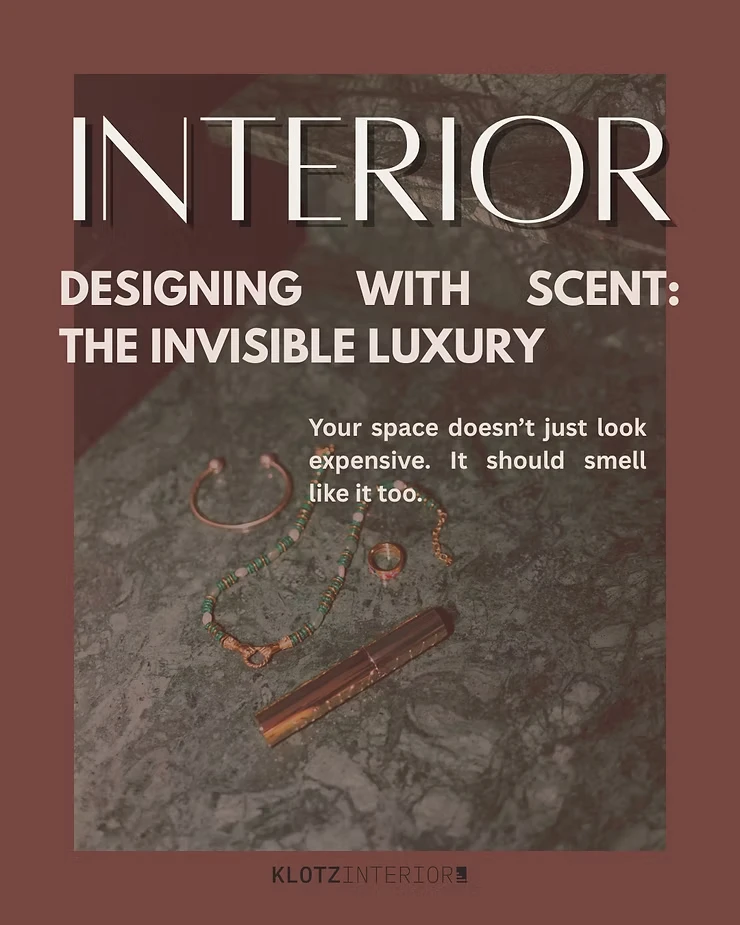
Your space shouldn’t just look expensive.It should smell like it, too.
👉 Book your free initial consultation today.
Stay inspired, Katharina Klotz
Klotz Interior – Interior Design from Berlin